Dental curing lights play a crucial role in modern dentistry, especially when it comes to polymerizing dental materials such as resins and composites. A high-quality curing light can significantly impact the efficiency of dental procedures, the quality of restorations, and ultimately, patient satisfaction. However, with various models and technologies available in the market, choosing the right dental curing light can be challenging. Here are the key features to look for when selecting a dental curing light that meets your practice's needs.

LED Curing Lights
LED (Light Emitting Diode) curing lights are the most popular choice in contemporary dental practices. They have several advantages over traditional halogen lights, including:
Longer Lifespan:LED lights generally last longer and require less frequent replacement.
Faster Cure Times:They typically cure materials faster than halogen lights, which can enhance efficiency during dental procedures.
Less Heat Generation:LED curing lights produce less heat, minimizing the risk of discomfort for patients and protecting the dental materials from overheating.
Halogen Curing Lights
While halogen curing lights are older technology, they may still be found in some practices. They produce a broad spectrum of light but tend to have shorter lifespans and may require more frequent bulb replacements. If you consider a halogen light, ensure it has specific features that might make it competitive, such as stability and consistent output.
Optimal Light Spectrum
When selecting a dental curing light, consider the wavelength output, which is crucial for effectively curing specific dental materials. Most dental resins are optimized to cure at specific wavelengths, typically around 400 to 500 nanometers.
Suitable for Various Materials:Look for curing lights that have a wavelength range suitable for the materials you typically use in your practice, such as composites and adhesives.
Broad Spectrum Lights
Some modern curing lights offer a broader wavelength spectrum that can cure multiple materials effectively. A light that can accommodate a range of materials provides versatility and can streamline the materials used in your practice.
Multiple Curing Modes
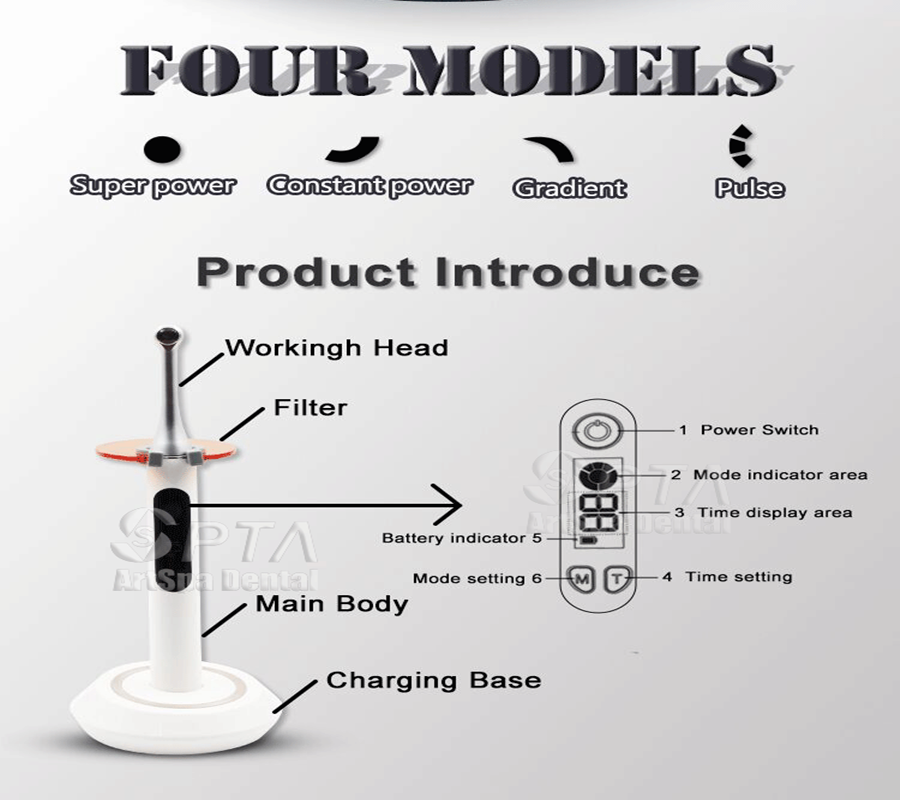
A high-quality dental curing light should offer various curing modes to accommodate different procedures and materials. Common modes include:
Standard Mode:Provides a constant light output for efficient curing.
Ramp Mode:Gradually increases intensity, which can help reduce sensitivity and discomfort for patients.
Pulse Mode:Emits light in pulses, which may benefit certain procedures requiring more controlled curing.
Having multiple modes enhances the versatility of the curing light, allowing dental professionals to adapt their techniques to fit the needs of each patient and clinical scenario.
Cordless vs. Corded Designs
Consider whether you prefer a cordless or corded curing light. Cordless lights offer enhanced mobility and ease of use, especially in situations where accessibility may be limited.
Battery Life:If opting for a cordless model, pay attention to the battery life and ensure it can last through multiple procedures without needing to be recharged frequently.
Charging Time:Check how long it takes to recharge the battery fully, as frequent downtime can impact workflow efficiency.
Weight and Ergonomics
Choose a light that is lightweight and ergonomically designed, making it comfortable to use throughout the day without causing strain. A well-balanced light can enhance precision during procedures and reduce the risk of physical fatigue for the dentist.
User-Friendly Controls
Look for a curing light with intuitive controls and clear indicators for ease of operation. A light that is straightforward to use will enhance workflow efficiency, particularly in busy practices.
Cleaning and Maintenance
Consider how easily the curing light can be cleaned and maintained. Some designs have detachable components or are made from materials that resist contamination, making them easier to disinfect and maintain over time.
Construction Materials
High-quality dental curing lights are typically constructed from durable materials designed to withstand the rigors of a clinical environment. Assess the build quality and check if the device is resistant to impact and chemicals.
Warranty and Support
Finally, consider the warranty offered by the manufacturer, as well as the availability of customer support in case of issues. A longer warranty can provide peace of mind and assurance of quality.
 In What Ways Can the Multi-functional Mobile Dental Surgical System Enhance the Efficiency of Dental Surgeries?
 How Does the New Type Touch Screen Electric Micromotor Compare to Traditional Micromotors in Terms of Efficiency and Usability?
 In What Ways Does the Touch Screen Interface Enhance User Experience with the New Type Electric Micromotor?
 What Are the Key Features of the Multi-functional Mobile Dental Surgical System That Make It Stand Out from Traditional Dental Equipment?


