
Dental loupes are invaluable tools that enable dental professionals to perform their work with greater precision and efficiency. The ability to magnify the oral cavity facilitates better visualization of intricate details, allowing for improved diagnosis and treatment. However, not all procedures require the same level of magnification. Understanding how different magnification levels impact precision and workflow can help dentists optimize their performance and enhance patient care. In this article, we will explore the effects of varying magnification levels in dental loupes and their implications for practice.
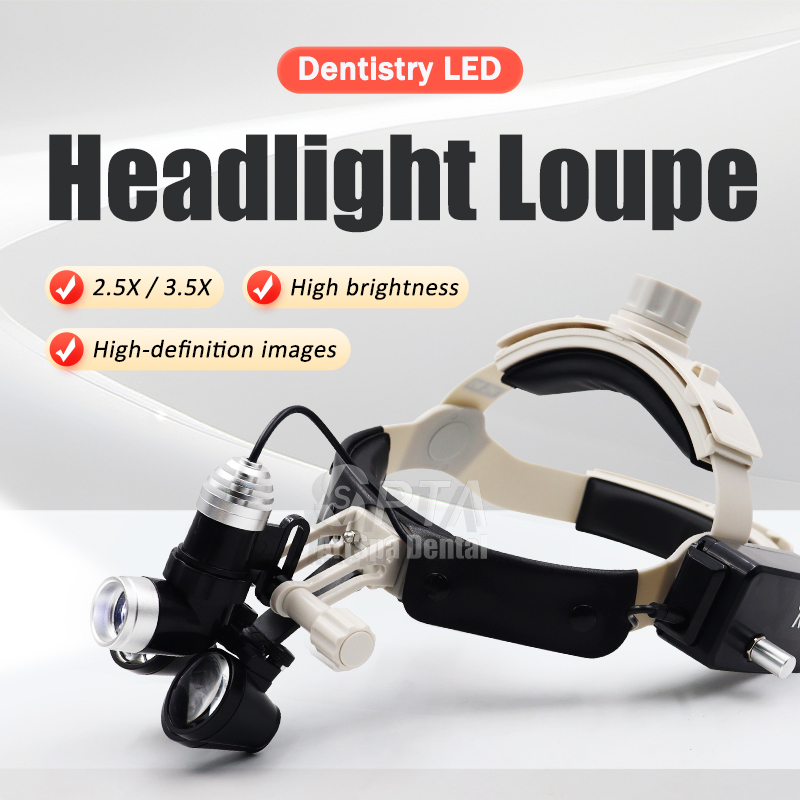
1. Understanding Magnification Levels
Dental loupes come in a range of magnification levels, typically from 2.5X to 6.0X, each designed for different tasks. Lower magnifications (2.5X to 3.5X) provide a broader field of view, useful for general exams, while higher magnifications (4.0X to 6.0X) allow for a much closer look at intricate details, making them ideal for more complex procedures such as endodontics or periodontal surgeries.
Enhanced Detail Recognition:Higher magnification levels provide greater detail recognition. Dentists can see minute structures, such as fine root canal systems or subtle enamel defects, that may not be visible at lower magnifications. This enhanced visibility allows for improved diagnosis and meticulous treatment planning.
Tool Control and Accuracy:When using higher magnification, dentists often work with smaller instruments, which require greater precision. For example, during restorative procedures, a higher magnification makes it easier to achieve exact margins and proper fit for crowns or fillings, significantly improving outcomes.
Depth Perception and Focus:Different magnifications can also affect depth perception and focusing ability. Lower magnifications may allow for better overall depth perception, making it easier to assess spatial relationships in broader areas, while higher magnification can necessitate a more concentrated focus but may limit peripheral awareness.
Efficiency and Speed:Using an appropriate magnification level helps streamline the workflow. For instance, practitioners may find that employing a decent level of magnification during initial exams allows for quick assessments while reserving higher levels for more complex follow-ups. This helps in balancing speed and accuracy, ultimately enhancing overall productivity.
Reduced Rework:Greater precision due to higher magnification levels can lead to fewer mistakes and less rework. For example, when performing procedures that require intricate detailing, such as cosmetic restorations or crown preparations, the ability to see small nuances helps dentists avoid errors that could necessitate corrections. This subsequently saves time and enhances patient satisfaction.
Adapting to Various Procedures:Different procedures may call for different levels of magnification. The versatility in using loupes with varying magnifications allows dentists to adapt to the specific needs of each case. By switching between magnification levels as needed, they can maintain efficiency without sacrificing precision.
4. Choosing the Right Magnification
Assessing Individual Needs:Every dental practitioner has unique preferences and comfort levels when it comes to magnification. Factors such as eyesight, work style, and specific types of procedures performed can influence the ideal magnification choice.
Trial and Evaluation:Many manufacturers offer trial periods for different magnification levels. Taking advantage of these opportunities allows dentists to assess how various levels impact their precision and workflow before settling on a specific set.
Training and Familiarization:Proper training on how to effectively utilize loupes at different magnifications can further enhance their benefits. Dentists and their teams should practice using loupes with the intended magnification levels to adapt quickly and become proficient in their use.
The selection of appropriate magnification levels in dental loupes plays a significant role in enhancing precision and workflow for dental practitioners. By understanding the distinct advantages offered by various magnifications, dentists can make informed decisions that allow them to deliver higher quality care and improve patient outcomes. Balancing magnification with practical needs, combined with effective training and familiarity, ensures that dental loupes become powerful allies in every dental practice. Ultimately, the right magnification not only enhances a dentist’s capability to perform but also enriches the overall patient experience.
 In What Ways Can the Multi-functional Mobile Dental Surgical System Enhance the Efficiency of Dental Surgeries?
 How Does the New Type Touch Screen Electric Micromotor Compare to Traditional Micromotors in Terms of Efficiency and Usability?
 In What Ways Does the Touch Screen Interface Enhance User Experience with the New Type Electric Micromotor?
 What Are the Key Features of the Multi-functional Mobile Dental Surgical System That Make It Stand Out from Traditional Dental Equipment?


