
In the demanding field of dentistry, precision and clarity are paramount. The right pair of dentist glasses can make a significant difference in a practitioner’s ability to perform intricate procedures effectively. One of the critical factors influencing the functionality of dentist glasses is the type of lenses used. This article will explore how different lens types in dentist glasses affect your daily practice, focusing on aspects like vision clarity, comfort, fatigue reduction, and overall performance.
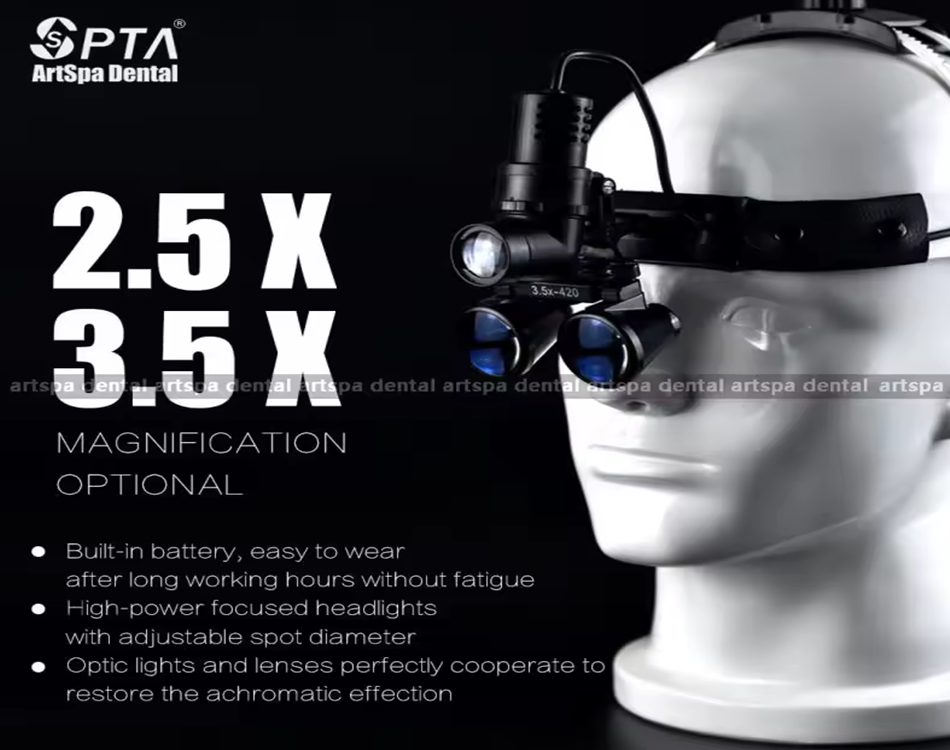
Characteristics
Single vision lenses have one prescription throughout the entire lens and are designed for a specific focal distance. These lenses are commonly used for tasks requiring clear vision at one distance, such as general examinations and restorative procedures.
Impact on Daily Practice
Simplicity and Focus:Single vision lenses provide clear, focused vision, which is essential for dental work that requires detailed observation. This simplicity allows dental professionals to perform routine tasks without the distractions of multi-focal corrections.
Reduced Eye Strain:By eliminating the need for eye adjustments between multiple focal points, single vision lenses can minimize eye strain, particularly during longer procedures.
Characteristics
Bifocal lenses contain two distinct optical powers—one for distance vision and another for near vision—separated by a visible line. These lenses are particularly beneficial for dental professionals who need to switch between distances frequently.
Impact on Daily Practice
Versatility:Bifocal lenses allow practitioners to seamlessly transition between tasks that require distant and close-up vision, making them suitable for activities ranging from examining a patient's overall condition to focusing on minute details within the oral cavity.
Practicality for Dentists:For example, while discussing treatment plans from a distance, a dentist can quickly shift focus to the dental tools or the patient's mouth without needing to remove their glasses.
Characteristics
Progressive lenses offer a gradual change in lens strength, allowing for clear vision at multiple distances without the visible line found in bifocals. This technology provides a more natural visual experience for users.
Impact on Daily Practice
All-Day Comfort:Progressive lenses provide a seamless transition between different focal lengths, making them ideal for dental professionals who need to maintain focus on various tasks throughout the day, such as reading charts, working on a patient, and also seeing patients from a distance.
Natural Visual Experience:The absence of visible lines not only improves aesthetic appeal but also enhances the user’s ability to maintain eye coordination, which is crucial when performing detailed procedures that require constant eye movement.
Characteristics
Magnification lenses, often found in combination with loupes, provide varying levels of magnification, allowing practitioners to see details that are difficult to discern with the naked eye.
Impact on Daily Practice
Enhanced Detail Visibility:Magnification lenses allow dental professionals to see finer details in tooth structure, gum health, and restorations. This improved visualization is particularly beneficial for procedures like endodontics, where precision is critical.
Greater Precision:Increased visibility can lead to more accurate and successful outcomes, ultimately improving the quality of patient care and enhancing overall practice efficiency.
Characteristics
Photochromic lenses automatically adjust their tint in response to changes in light exposure. These lenses darken in bright environments and return to clear indoors.
Impact on Daily Practice
Adaptive Vision Protection:Photochromic lenses provide protection against harmful UV rays and reduce glare in bright clinical settings. This feature can be particularly beneficial when working under strong dental lights or in brightly lit environments.
Comfort in Varied Lighting:The adaptability of these lenses allows dental professionals to maintain comfort in various lighting conditions, reducing distractions and allowing for sustained focus during procedures.

6. Anti-Reflective Coated Lenses
Characteristics
Lenses with anti-reflective (AR) coatings are designed to reduce glare from overhead lights and digital screens, enhancing overall clarity.
Impact on Daily Practice
Reduced Glare:Anti-reflective lenses minimize reflections, making it easier to see clearly regardless of the lighting conditions in the dental office. This clarity is crucial when working with dental materials or in direct light.
Enhanced ContrastImproved contrast provided by AR coatings helps practitioners distinguish between subtle differences in shade and texture, which is particularly beneficial in cosmetic dentistry.
The type of lenses used in dentist glasses profoundly impacts a dental professional's daily practice. Whether opting for single vision, bifocal, progressive, or specialized lenses, each type offers unique benefits tailored to specific tasks and environments within the dental field. By understanding how different lens types affect vision clarity, comfort, and overall performance, dental professionals can choose the optimal eyewear to enhance their precision and efficiency during procedures. Investing in the right dentist glasses not only improves individual practice outcomes but also contributes to higher levels of patient satisfaction—making it an essential consideration for any dental practitioner.
 In What Ways Can the Multi-functional Mobile Dental Surgical System Enhance the Efficiency of Dental Surgeries?
 How Does the New Type Touch Screen Electric Micromotor Compare to Traditional Micromotors in Terms of Efficiency and Usability?
 In What Ways Does the Touch Screen Interface Enhance User Experience with the New Type Electric Micromotor?
 What Are the Key Features of the Multi-functional Mobile Dental Surgical System That Make It Stand Out from Traditional Dental Equipment?


